


Joseph Bell opened the tin-roofed Empress Theatre, with its straight wooden benches, in June 1928, on Arthurstone Terrace. In September of that year he sold it to W. R. Falconer, a wine and spirit merchant for £3,750 complete with furnishings and fittings. The following month the purchaser cancelled the deal and was sued by Bell for £1,000 in damages. Bell persisted, though, and a few years later sold it to a Mrs Shand, later Mrs White, who re-built it with drop ceiling and “tip-up cushioned seats, the last word in cinema comfort” and re-named it The Broadway Theatre.
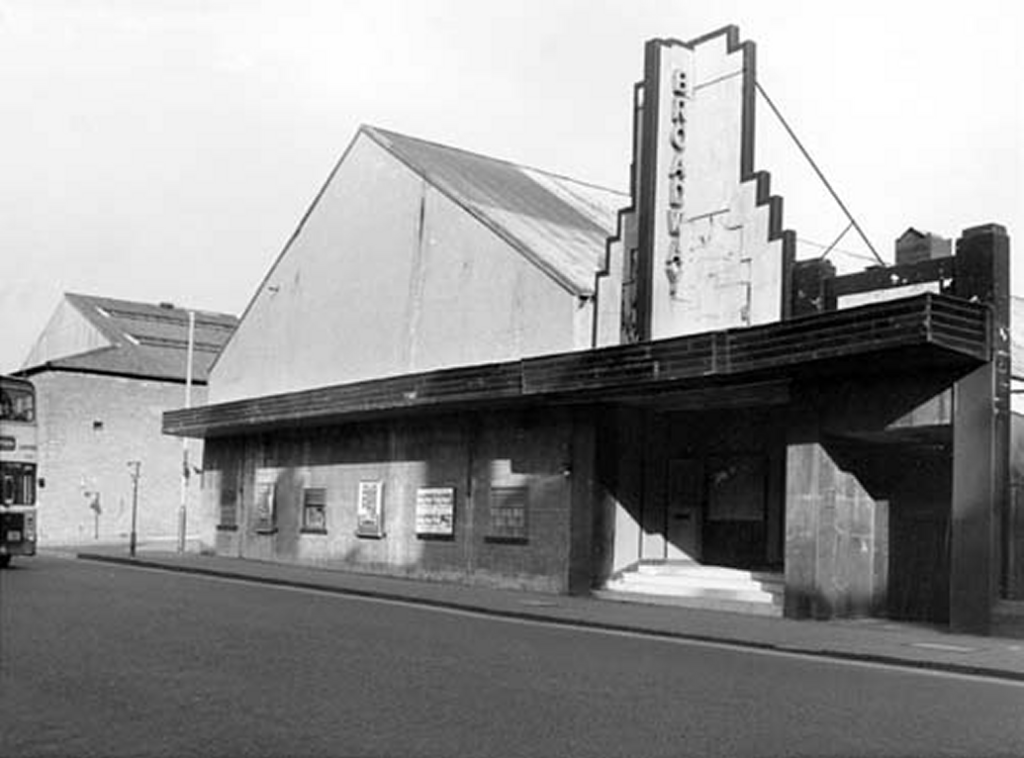
The Broadway Cinema was closed for one day by Dundee Town Council in 1932 for showing the banned film ‘Her Child’.
In November 1934 the star act at the Broadway was Hughie Green and his B.B.C. Gang of youngsters “with an abundance of natural talent”. Hughie, of later of ‘Opportunity Knocks’ fame, despite his tender years, compered “with his easy stage presence and never failing aplomb” did impressions of famous stars of the day like Maurice Chevalier, Nellie Wallace and Leslie Henson.
The Theatre said to be haunted by ghost of of a one-time projectionist.
1937 The Broadway was acquired by Mr & Mrs Gibbs who had run the Cinema in Morgan St for the previous six years.
In August 1938 the Broadway reopened under the new management of James Currie, previously of the City’s Palace Theatre, who lost no time in making his mark.
Patrons of the Theatre in November 1938 were treated to a “Bathing Belles” competition. Described by the Dundee Courier as a “beautiful figure competition”, there were cash prizes for the winners but the competitors were masked.
The very next month the Broadway put on Pete Davis’ production of ‘Joy Express’ featuring a performance of the previously banned ‘Dance of The Seven Veils’ with the principal dancer Katinka “revealing some amazing contortions” and being given a “great reception by the large audience”.
In February 1939 the Broadway Theatre re-opened as a cinema after “extensive alterations” walls tiled with asbestos tiles and “absolutely fire-proof” projection equipment.
One day in September 1948 400 East End children were entertained to a showing to ‘King of the Stallions and on leaving each child was given a bag of fruit.
The Broadway’s popular success was attributed to both the quality of its programmes and its extensive advertising. It was converted to accommodate Cinemascope in 1952 and continued as a cinema until 1963 when it was converted to be the All Square Bingo Club. It lay derelict until 1991, when it was demolished.